
Long-term care · The experience behind the staffing report
Protect the time
that makes care personal.
Your staffing report shows the shift was covered. A family describes a resident still waiting for help. A care aide tells your director of care what they had to leave undone.
You need those accounts together. The hours on the rota, the care residents experience and the strain staff carry home each reveal a different part of the same working day.
Carecraft gives you and your care leaders a place to work with that reality: hear the concern without blame, examine the demands behind it, and develop colleagues who can lead a response across shifts.
Make the next shift different.
Bring a recurring concern into the programme. Work out what the team can change, which decision needs your authority, and what residents and staff should experience differently at the next review.
What you develop through Carecraft
Develop the people
who carry care across shifts.
Bring the whole account into view.
Help a care leader bring resident, family and staff perspectives into one conversation. Practise hearing what is difficult to say without rushing to reassure or defend.
Give a colleague a supported decision.
Rehearse the conversation they need to lead. Agree their authority, the resources available and when your backing is needed.
Return to the people receiving care.
Check the response on another shift. Hear what residents and staff experienced, adjust the arrangements and build that review into everyday leadership.
Your guide · Trace Hobson
Work with someone who
understands the responsibility.
You are balancing residents’ needs, family expectations, staffing pressures, and your responsibility for the people providing care. Another framework is only useful if you can apply it in that reality.
Trace has trained leaders and teams across many long-term care facilities. He brings that experience together with psychological health and safety work and more than 10,000 hours of coaching and team work across his practice.
Meet Trace and explore his experienceHow we begin
A clear way
to get started.
Request the outline.
Prepare an email requesting the Carecraft programme outline and employer brief.
Discuss the fit.
Talk through your situation, participation time, proposed fee, and workplace support. Include your manager when useful.
Practise in your home.
Work with a real situation, develop a colleague, and review how the team carries the response.
Start with an enquiry. We agree the fit, scope, time, and investment before you commit.
Carecraft · Programme at a glance
Human Intelligence for Care Leadership
For directors, managers, and leaders responsible for people and care in long-term care.
Work on a recurring situation, develop a colleague, and help your team carry a supported response. Psychological health and safety belongs in the conversations and the conditions of the work.
- Who takes part
- You and the leaders responsible for people, care, and day-to-day decisions in your home.
- Who commissions it
- You or the employer supporting your participation. Include your regional or senior leader when their backing is needed.
- Proposed format
- 10 weeks · 8–10 leadersSix practice labs, two application clinics, and a follow-up 30 days later.
- Your time
- 18–20.5 learning hoursPlus workplace application. Optional manager briefings add 1.5 hours.
- Workplace backing
- A supported live situationAgree authority, time, and support with the person approving participation.
- Proposed investment
- CAD $1,500 per leaderPlus applicable taxes. Dates, delivery arrangements, and terms confirmed before enrolment.
Prepare an email to request the outline and employer brief. You can then discuss a 25-minute fit conversation, including your manager if useful. An enquiry starts a conversation; it does not book a place or session.
“Trace has an ability to see the bigger picture and how psychological safety affects every aspect of our working lives; he also brings strategic thinking and creative solutions to support wellness for all.”
Practise with the people
who carry the response.
I help long-term care leaders develop teams who lead with and without them. Together, they tackle recurring problems: unsafe conditions, harmful behaviour, unsustainable workloads and the distress of caring under pressure. The goal is a psychologically safe and healthy workplace where leaders and staff are supported, residents receive exceptional care, and families can trust that their loved ones are well cared for.
Start with what is happening in your home.
A family complaint has come back again. Your charge nurse is at the door, asking you to take over.
What would help them lead the next conversation?
The reliable people absorb the gap.
One more shift. One more task. Care continues because the same people keep stretching, while the capacity problem goes unresolved.
Advice hasn’t become capability.
Your supervisor knows what you would say. They need a chance to practise the difficult part, get feedback and try it with support.
Responsibility needs backing.
A team can make some changes itself. Staffing, priorities and resources may need a decision from you—or someone above you.
The concern was reported. The behaviour was mentioned. Now the team has stopped bringing it up.
Has something changed—or have people stopped expecting a response?
A warning needs a response.
Hearing about a danger is the beginning. Your team needs to know who will act, what protection is in place and what still needs attention.
One person’s conduct affects everyone.
Humiliation, intimidation and undermining become the team’s burden when expectations are unclear or the difficult conversation is avoided.
Trust grows through follow-through.
Return to the people who raised the concern. Find out whether the response reached them and what they are still experiencing.
The shift has ended. A member of staff is still thinking about the care they couldn’t give.
What happens after someone tells you they’re struggling?
Care left undone stays with people.
Make space to hear what mattered, what prevented it and which conditions need a decision. Bring that experience into the response.
An incident can outlast the shift.
After a traumatic event, people may still need support when the immediate response is over. Keep contact, protection and follow-up visible.
Conflict with residents and families keeps returning.
Disagreements about care, repeated complaints or escalating conversations leave staff unsure what to say. Help them hear the concern, hold clear boundaries and agree who will follow through.
The next concern can become a chance to develop someone—while addressing what your home needs to change.

Mission, British Columbia
I work with the people
others rely on.
I’ve trained leaders and teams across many different long-term care facilities. That experience is the starting point for Carecraft: developing the people whose leadership shapes daily life for residents, staff and families.
I bring that experience together with my psychological health and safety work at Fraser Health and a wider career spanning thirty years in operations, coaching and leadership development. My work includes developing coaches and practitioners who can carry what they learn into their own teams.
In Carecraft, we work with situations from your home: the conversation a leader needs to have, the concern that needs a response, or the decision about what staff can reasonably carry. We practise the human skills to create psychologically healthy and safe working environments, alongside the judgement to recognise what needs different resources or support.
I know what it is like to be overlooked, unsupported and left carrying too much alone. When I work with you, I’m thinking about your experience as a leader and the people who depend on you.
The people others rely on need people they can rely on, too.
For me, this work is an expression of faith, connection and the work I’m here to do.
Trace
Presence, backed
by practice.
More than 10,000 hours coaching leaders and working with teams, alongside experience inside healthcare, industry and other high-pressure organizations.
Education & professional credentials
 Royal Roads University
 University of Fredericton
 Simon Fraser University
 MTHS Certified Trauma-Informed Coach
 ICF Professional Certified Coach
 Certified Transformational Presence Coach
A few of the organizations I’ve worked with
 Fraser Health
 Island Health
 BC Hydro
 TELUS
 Vancouver 2010 Olympics
 Peter Kiewit
 City of Vancouver
 FortisBC
Notice more.
Respond differently.
When pressure narrows the conversation, something important can go unheard. Four channels of awareness help you reconnect with yourself, your people and what the situation is asking of you.
Presence Intelligence
Notice the tightening in your body, the rush to fix it, the answer you’re already preparing. Make enough room to choose how you respond to the person in front of you.
Human Intelligence
Hear what the care aide sees, what the night shift experiences and what the resident or family is trying to tell you. Their knowledge can change your understanding of the problem.
Safe Space Intelligence
Pay attention to what happens when someone disagrees or raises a concern. Create space for people to speak honestly, hear each other and work through what has been difficult to say.
Connected Intelligence
Listen for what is seeking expression through the recurring problem.
Connect with the wider living system—the relationships, rhythms and life of the home. Stay open to what becomes visible when you listen together.
What wants to happen here? Who is this asking you to be? What is it asking you to do?
We bring what you notice into the conversation your team needs—and the action that follows it.
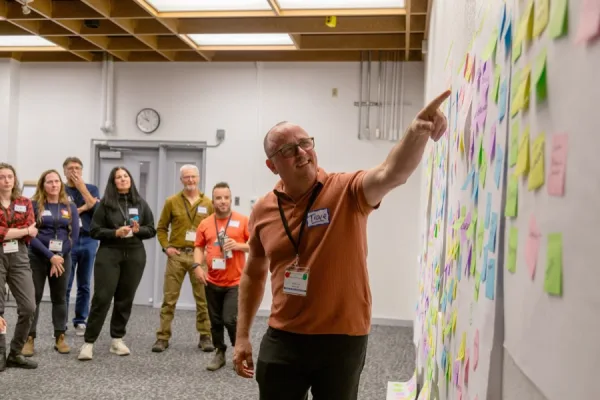
Help them practise
the part that gets difficult.
A family member says, “No one is listening.” Your supervisor feels blamed, starts defending the team and the conversation gets stuck. Soon, you’re asked to step in.
We practise moments like this: noticing your own reaction, hearing what matters to the resident or family, and holding a clear boundary. You learn to demonstrate a response, let your colleague try it and give feedback they can use.
Then the learning moves into the home. You agree what they can lead, what backing they need and when you will look together at what happened.
An illustrative practice situation, not a client case study.
Connect.
Attend to yourself, the person and the situation. Hear what happened before deciding what it means.
Converse.
Ask the question that opens the conversation. Let another person’s experience change what you understand.
Confront.
Meet the decision, boundary or expectation that needs attention. Agree who can act, what support is needed and how you will follow through.
The next step happens.
You didn’t have to lead it.
Your charge nurse has held the conversation. The team has agreed an action. They know what they can carry and which decision still needs your backing.
You can support their judgment and stay connected to what happens next.
A concern has an owner, an action and a time to check back.
A colleague has practised something they can now help another person learn.
Staff, residents and families have a way to say whether the response made a difference.
These are the changes we work toward and review together.
“Trace creates a safe space for people to explore their experiences, both individually and as a team. He shows up grounded and prepared, leading the group skillfully, with ease and kindness. The experience was transformative.”
Carecraft
Human Intelligence for Care Leadership.
Practical leadership development for long-term care
Work on one recurring situation while you develop a colleague and help your team carry the response. Practise the conversations, obtain the backing needed and review what happens when you aren’t leading every step.
Proposed format: ten weeks with 8–10 leaders, plus a group follow-up 30 days later.
Proposed fee: CAD $1,500 per leader, plus applicable taxes.
Request Carecraft detailsPrepare an email to request the outline and employer brief. We’ll discuss fit, time and workplace support; final dates, scope, fee and terms are confirmed before enrolment.
Teaching you can use.
Support to put it into practice.
- Curriculum. Six 90-minute practice labs on leading under pressure, feedback, developing others, team responsibility, boundaries and follow-through.
- Coaching. Two one-hour application clinics, feedback on three concise submissions and weekly group-question support during the ten weeks.
- Community. Practise with a small group of LTC leaders. Learn from each other’s situations in a private learning space, with clear support boundaries.
Your learning travels into the home: one willing colleague, one supported team action and an honest review of what changed.
Request the programme outline.
See the proposed programme, fee and employer brief before deciding on your next step.
Talk through the fit.
In a 25-minute conversation, discuss your situation, the colleague you could develop and the workplace backing needed. Include your manager when useful.
Agree the details before joining.
Confirm the dates, scope, fee and participation time before enrolling in the cohort.
Develop one leader.
Grow what a team can do.
For directors of care, site managers and equivalent leaders who develop supervisors or a defined workplace team.
You learn through a situation your home already needs to address. The measure is what your people become able to carry into the work.
Work on the conversation you need.
See a demonstration, try the difficult moment and receive feedback. Build your ability to listen, give feedback and hold expectations while working with other LTC leaders.
Help a colleague become able to lead.
Choose a willing colleague. Help them rehearse, give specific feedback and support their next attempt. Review what they can now carry and where they still need you.
Give team action the backing it needs.
Put learning to work on a real concern. Involve your employer in protecting time, clarifying authority and responding to decisions beyond the team’s role.
See what reaches the next shift.
Review the conversation, your colleague’s development and the team’s action. Keep a clear record of what changed, what remains unresolved and what the team can lead again.
Give the learning a place to take hold.
Two shared 45-minute employer briefings help clarify time, authority and support. A one-hour closing review and a one-hour group follow-up 30 days later examine what the team can carry forward.
Allow approximately 18–20.5 learning hours across the programme, plus workplace application. Attending both employer briefings adds 1.5 hours.
Make room
for the questions.
Is this for my role and my care home?
The programme is being shaped for directors of care, site managers and equivalent leaders in privately operated BC long-term care, including nonprofit and for-profit homes. You need a team or colleague you can develop and a suitable situation to work on. If your role is different, we can discuss the fit.
How much time would I need?
The proposed ten-week format includes six 90-minute labs, two one-hour clinics, a one-hour closing review and a one-hour group follow-up 30 days later. Allow approximately 18–20.5 learning hours in total, plus workplace application. Attending both employer briefings adds 1.5 hours. Agree participation time and any coverage with your employer before enrolling.
Does my whole team attend?
The proposed purchase is one leader’s place in the group. You use the practice tools with a willing colleague and your workplace team. Their participation happens in the home, with time and support agreed; they do not all attend the cohort sessions.
What if the real problem is staffing or resources?
We make that constraint visible and identify the decision it needs. You practise helping your team make a clear request, obtain a response and follow through. Staffing, funding and operational authority remain with your organisation.
How will we know whether it is helping?
We look at what someone did: a necessary conversation, a colleague’s developing capability, an action led by the team and what the people affected experienced. You keep a record of decisions, follow-through and unresolved barriers that can support your improvement work. Outcomes are reviewed in your home; savings, clinical results and compliance are not guaranteed.
What is the proposed fee?
The working proposal is CAD $1,500 per leader, plus applicable taxes. The final fee, dates, scope and terms will be provided before you decide to enrol. Include participation time and any required coverage in your discussion with your employer.
What if the situation is sensitive?
Use roles and general descriptions in enquiries and group practice. Keep resident, family, employee and confidential organisational details within the appropriate workplace processes. Urgent care, safety and employment matters need the responsible people in your organisation. Recording and group privacy arrangements will be explained before participation.
Do I need to attend the free workshop first?
No. Request programme details to discuss the programme directly. The optional 90-minute introductory workshop lets you try the teaching first. Its next date and format are still to be confirmed.
Your next step
See what it would take
to bring this into your home.
What you are working towards
Your team can carry more
than the problem back to you.
A care leader can take a family concern through to a reviewed response. Staff know who can decide when demands exceed capacity. Residents and families are included when the team checks what changed. You can see which responsibilities the team now carries and where your support is still needed.
We agree what progress would look like in your situation, then review the evidence together.
Request Carecraft detailsLet’s look at what
your team needs.
Request the programme outline and employer brief for Carecraft.
Tell me a little about your role and the situation you want to work on. We can discuss the programme, time, fee and workplace support before you decide whether to join.
You can start by email, ask for a 25-minute fit conversation or include the person who would approve participation.
Want to experience the teaching first?
Help your team lead the next step without you taking over. The optional free 90-minute introductory workshop gives you a chance to try the teaching with a real situation.
See a demonstration, practise a conversation and identify the authority and support the next step needs. The next date and format are still to be confirmed.